About ScreenToGif
ScreenToGif is an animation capture and editing tool developed by Nicke Manarin and his contributors. It records a region of the screen, a webcam or a drawing board, then opens the result in an editor for the individual frames. Listed in category for Windows, it is suitable for short demonstrations: explaining a click, showing an interface problem or preparing a small animation for documentation. You can remove images, adjust their duration and add elements before choosing the output format.
The project is separate from live streaming software. Its interest lies in the precise preparation of a short sequence, with control over the images retained. The final size depends in particular on the dimensions, duration and number of images. The official repository offers several architectures and installable or portable packages. Light and full packages don't have the same built-in dependencies. Check the chosen package rather than just comparing its download size. The former product website may redirect to another product from the developer. This page describes ScreenToGif and the packages in its own repository, so check the product name before downloading.
Delimit a capture around the useful action
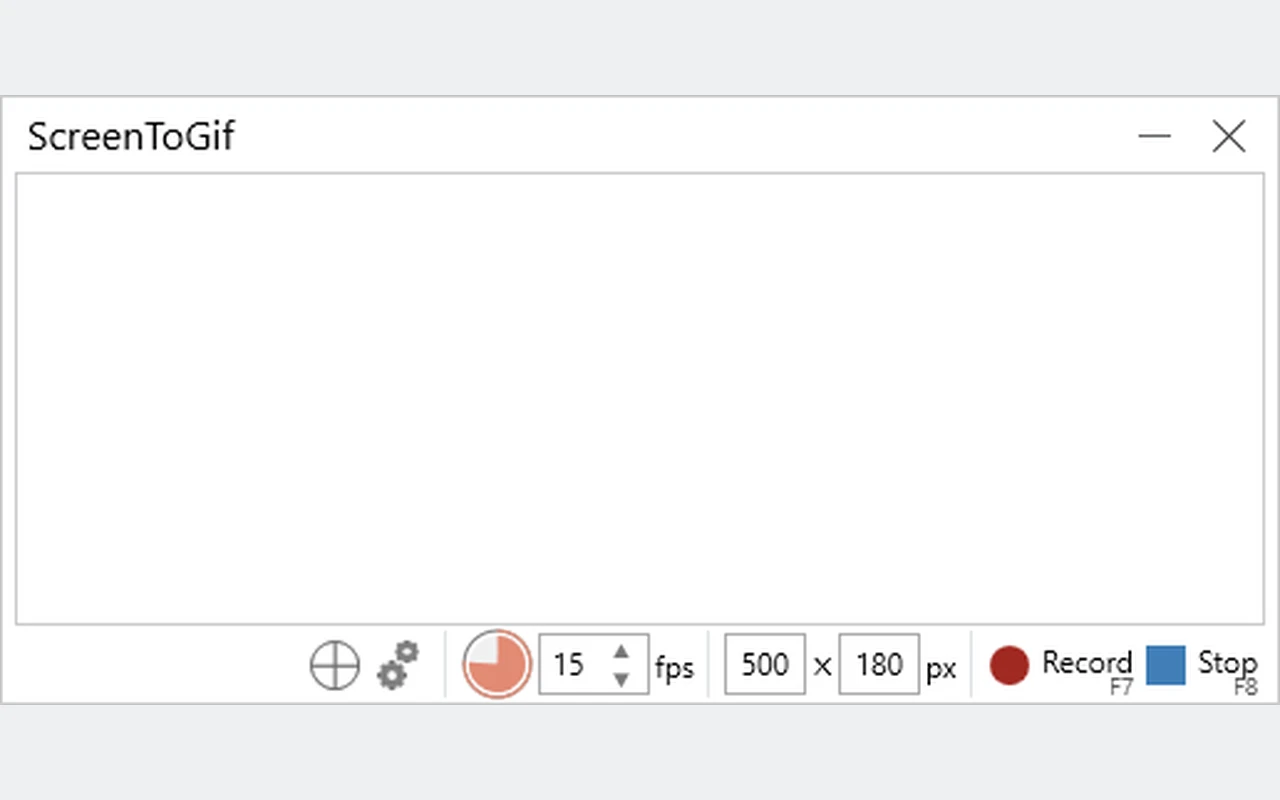
Place the capture window on the region to be explained before you begin. A limited area often makes the result more readable and reduces unnecessary elements. Prepare the target application to avoid saving a long menu search. Choose a frame rate appropriate to the movement: a typing demonstration and a quick animation do not necessarily require the same number of frames. Run a short test to check the framing, pointer and duration. While capturing, avoid moving the target window outside the recorded region. You can then remove the idle moments in the editor.
Edit a sequence frame by frame
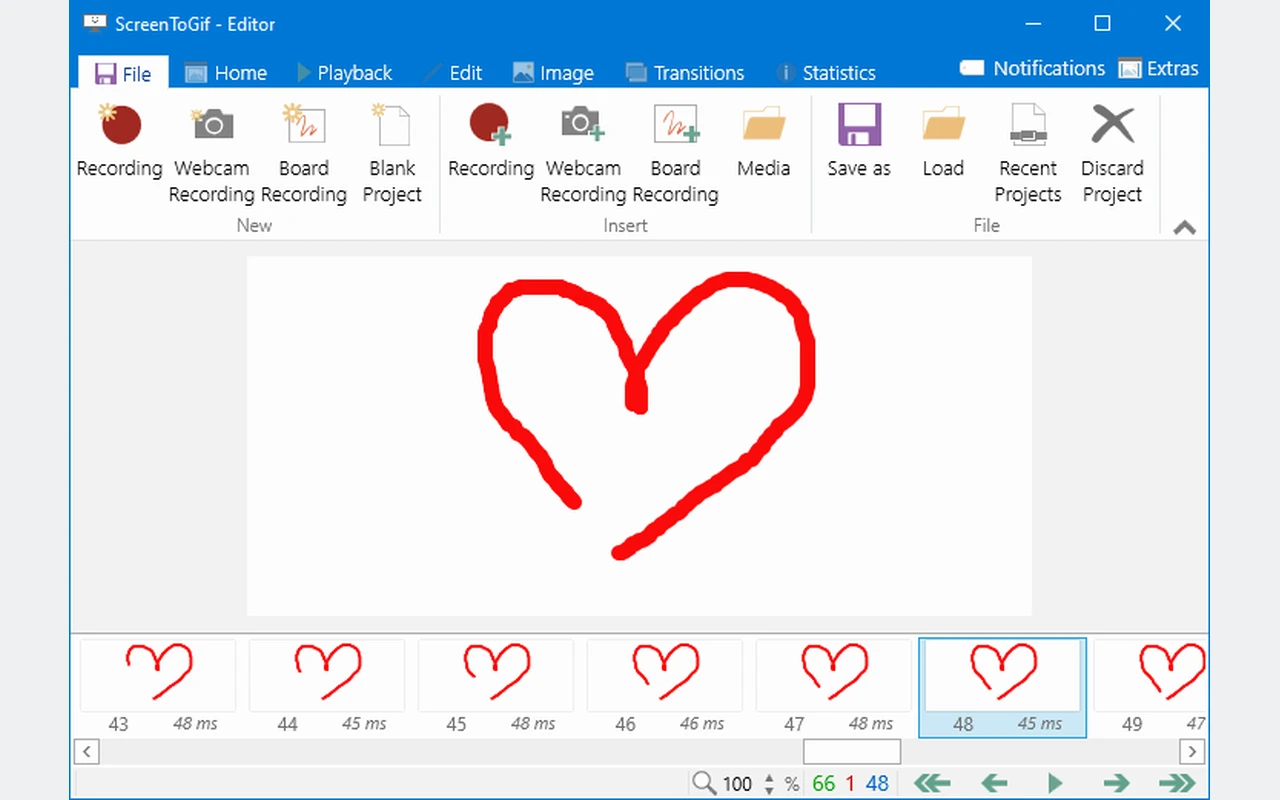
After recording, the editor presents the images that make up the sequence. Select unnecessary passages and check the transitions after deletion. The duration associated with each image allows more time for an important step without multiplying identical captures. Watch the full playback after several corrections: correct editing in a still view can become too fast in motion. Keep a working version before a major change. If you add titles or guides, check that they remain readable at the final dimensions and that they do not cover the button or result you want to show.
Adapt the export to the destination
GIF remains useful for simple animation, but it imposes color constraints and can become bulky. Other outputs meet different needs, depending on the encoders and options available. Before reducing all dimensions, check what actually explains the action: text, pointer, or visual change. Export a sample and open the resulting file in the destination application. The colors, loop and durations must remain understandable. An animation intended for a help page does not necessarily require the same quality as a demonstration presented on a large screen. Keep the project to then adjust the export.
Use annotations to clarify a demonstration
Visual cues can help the reader follow a short procedure. Add a hint when it becomes useful, then remove it when the action changes. Too much text or effects make the capture more difficult to read. Also check that the color of the mark remains visible against the background of the application. For a series of demonstrations, keep text size and positioning consistent. Annotations explain an existing capture; they must not make people believe that the application displayed missing information. Review the result from the perspective of someone who has never followed the procedure and does not know your shortcuts.
Choose the package and check the necessary components
The repository releases variants x86, x64, and ARM64, as well as lightweight and full distributions. Identify your architecture before downloading. Current documentation mentions the .NET 9 desktop runtime for configurations that require it. A small package therefore does not necessarily mean a smaller total installation on a machine that does not have its components. For some video exports, also check the settings related to FFmpeg. Use files from the same project and version. Patch 2.43.2 notes include video exchanges with FFmpeg and memory issues.
Choose between short animation, long capture and montage
OBS Studio is suitable for capturing multiple sources and streaming, while ScreenToGif favors short recordings that you want to rework frame by frame. Shotcut is used to organize a video edit using tracks. LosslessCut instead prepares cuts from existing files, depending on the format's limitations. These tools can complement each other in documentation or a presentation. First choose the expected result: an animated loop showing a gesture, a long recording or an assembled movie. Then test the final format and its file size before producing a whole series of captures intended for the same medium.
Key features
- Capture a chosen region on your screen.
- Recording from a webcam or board.
- Deleting unnecessary frames in a sequence.
- Setting the duration of each image.
- Added text and visual cues.
- Export of animations according to the available formats.
- Portable and installable variants for multiple architectures.
- Editable projects for producing several output versions.
System requirements
Windows; variants x86, x64 and ARM64. Runtime .NET depending on the package; RAM and disk minimums not confirmed.
Questions and answers
Does ScreenToGif replace OBS Studio?
The two tools do not cover exactly the same job. ScreenToGif prepares short captures and frame-by-frame editable animations. OBS Studio organizes multiple sources and broadcasts. Choose according to duration, inputs and expected result.
Why is the exported GIF very large?
The dimensions, duration and number of images strongly influence the file size. A long capture with a lot of movement may not be suitable for the GIF. Reduce unnecessary passages and compare another format when your destination allows it.
What is the difference between Light and Complete packages?
The distributions do not include the same components. A lightweight variant may require a runtime already present on Windows. Consult the package documentation and your architecture; download size alone does not describe all necessary dependencies.
Can we keep a capture to correct it later?
Keep the working draft before producing the file for the reader. It allows you to revisit the frames and their settings. A final export should not be considered an automatic replacement of all project elements.
Is the program only for making GIF?
The repository describes multiple outputs, including images and video, depending on the options and components available. Check your export in its final player. The compatibility of a format may depend on the configured encoder, not just its extension.
How to install
- Open the Releases from the official ScreenToGif repository and choose a Setup package adapted to your architecture.
- Download the full MSI if you want this distribution, then open it.
- Follow the wizard and verify the requested components for the chosen variant before finishing.
- Launch ScreenToGif, record a few seconds and test the export in the expected format.
Appbunda is an independent catalog and is not affiliated with the developer. Product names and logos belong to their owners. Always check the file source before installing.